


Welcome to Fresh Catch, the official FilmFisher newsletter!
Because our style of writing here at FilmFisher is very in-depth and requires a lot of time and attention for each piece, we don’t really write a lot about the newest releases that are coming out right now. With Fresh Catch, we’ll be in your inbox every Thursday morning to let you know what we’ve been watching recently and whether or not we think it might be worth your time to check out, both from the new releases hitting theaters every weekend and from the old favorites we’ve been revisiting.
Upstream
We’re offering a new feature in the Fresh Catch this week. On weeks we don’t have a new release to recommend, we’re wading into the nonstop river of content available to us all on the many streaming services Hollywood has to offer. We’ll recommend a movie available right now on a streaming service you might have access to, that doesn’t swim with the current of all the soulless content that gets dropped on us all the time, but that we feel is genuinely worth your time and consideration.
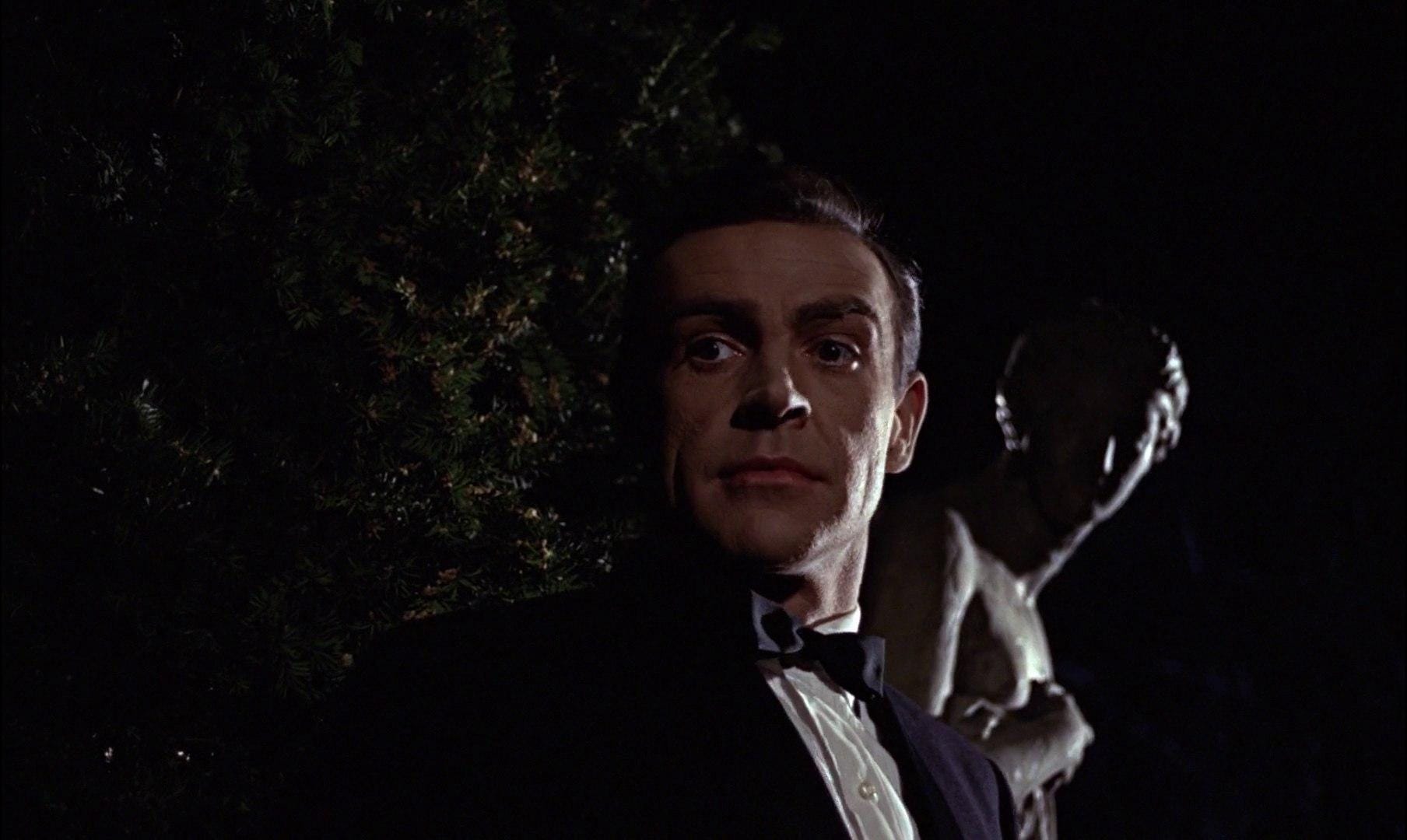
From Russia with Love (1963, writeup by Timothy Lawrence)
This month, the Criterion Channel is streaming the first three James Bond films, starring Sean Connery as 007. Of the three, Dr. No (1962) and Goldfinger (1964) are the more typical Bond movies, with megalomaniacal villains and over-the-top gadgets, but the comparatively subtle and muted From Russia with Love is the best precisely because of the qualities that make it atypical for Bond. An understatedly suspenseful espionage thriller that evokes John Le Carré more than Mission: Impossible, it privileges patient buildup over nonstop action, drawing inspiration from the work of Alfred Hitchcock (whose North by Northwest was released only five years prior). Its secret weapon is Robert Shaw's Red Grant, perhaps the best villain in the sixty-year-old franchise's substantial pantheon of colorful villains, a dark mirror of the hero who silently stalks him through the background of the entire film until they finally meet face-to-face in a white-knuckle confrontation of both skills and manners. Bond, ever the amoral aesthete, is ultimately distinguished from his nemesis less by his virtue than by his good taste; and Grant, scoffing at the honor of an "English gentleman," is undone not by a failure of technique so much as his own thuggish vulgarity. "Red wine with fish," Bond muses, sizing up his adversary after dinner. "That should have told me something."
Catch of the Week

Backrooms (2026, writeup by Dustin Stephens)
Already a seemingly overnight sensation, earning its 20-year-old director the honor of youngest director to score a number one movie at the US Box Office and over $100 million worldwide in its opening weekend, Backrooms has actually been a long time in the making. Kane Parsons, the film’s director, has been slowly building the mysterious story of a disorienting and unnerving space - dubbed “The Backrooms,” inspired by a long-running internet sensation - on his YouTube channel for years, doling out “found footage,” government dossiers, and Hard Sci-Fi short films since 2022. Backrooms, the movie, unveils the disturbing and mind-bending consequences of one troubled furniture store owner’s discovery of the titular “Backrooms” in his store’s basement. It’s an exhilarating, often terrifying, and frequently surprising movie that largely delivers on the promise of its sprawling concept - an unending maze of warped hallways, rooms, shadowy figures, and mysterious objects. Even further, it’s surprisingly insightful in its exploration of American culture’s increasing engagement and fascination with therapy as a tool to cope with the modern world. It’s a film ultimately ambivalent towards the therapeutic practices it portrays, showing their potential for healing, but also showing how our attempts at self-improvement will always (without the regenerative power of the Holy Spirit) be limited by our own willingness to change and our fallen nature. One character exclaims, with morbid glee, “I don’t have to change! It’s how I’m wired!” The film clearly displays the deadly implications of such a sentiment. The whole film is a mystery that challenges cultural understandings of human growth, salvation, and trauma in such a way that I can easily see Backrooms settling into a comfortable place as a cult classic of this generation.
Old Favorites: Corpus Christi
This week the church celebrates Corpus Christi, dedicated to the body and blood of Christ as expressed in the sacrament of communion. FilmFisher’s writers are recommending films that may serve as an opportunity for reflection on this day.
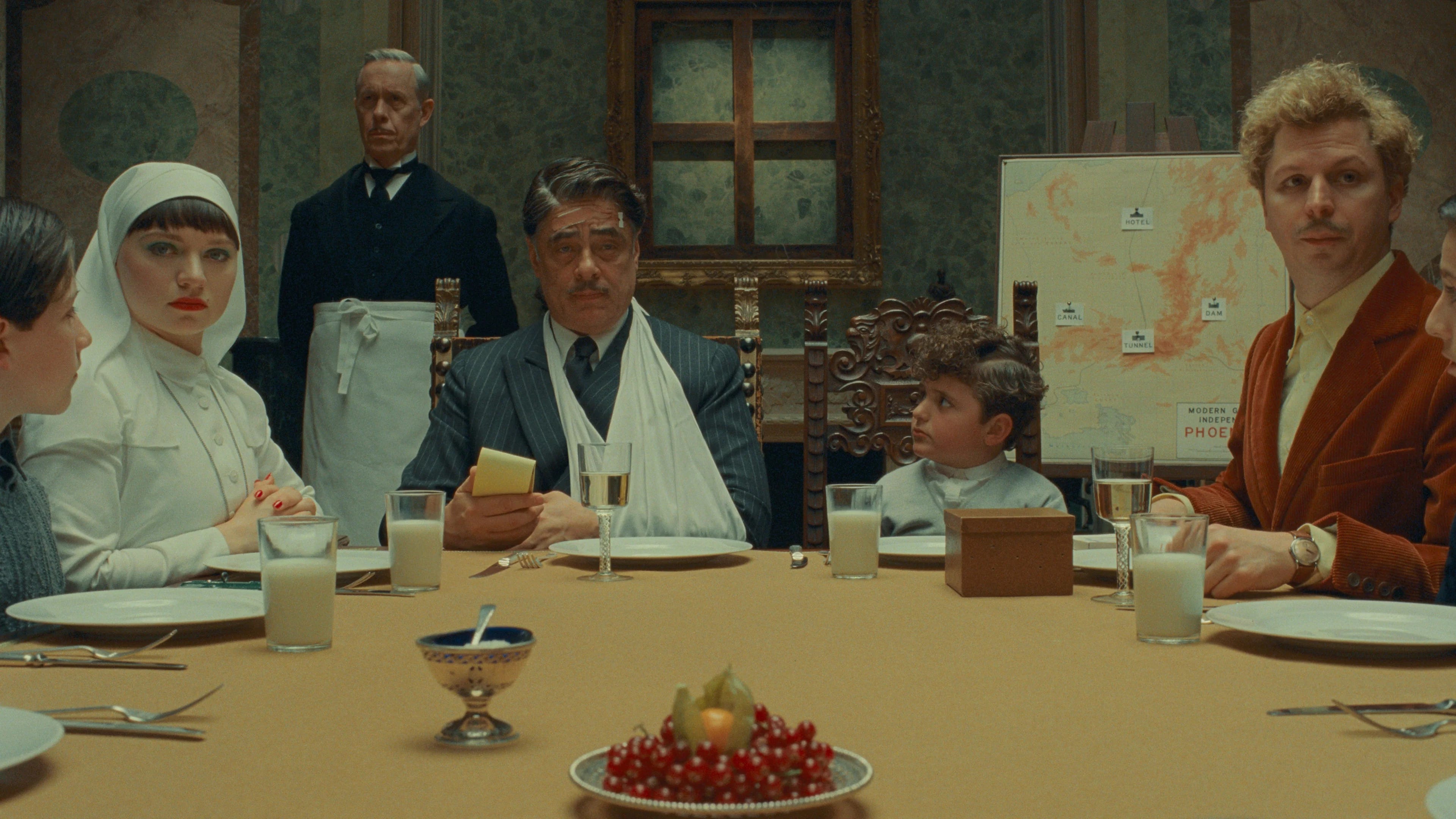
The Phoenician Scheme (2025, writeup by Timothy House)
Wes Anderson’s most recent offering is easily his most overtly religious, although he’s been at least a spiritually inclined fellow since the early days. Liesl, Mia Threapleton’s character in The Phoenician Scheme, begins the film as a nun. Although by the end she has left her habit behind and declined to take her vows (at the urging of her Mother Superior!), she has nevertheless converted her father Zsa-Zsa Korda (Benicio del Toro) to her faith, and remains a Christian. Her influence throughout the film gradually shapes her father’s character, leading him to an entirely out of the ordinary act of bold self-sacrifice at the climax. At many points during the movie, the whole Korda family sits down to a meal together, something Zsa-Zsa had never done before, which symbolizes their drawing together as one, and in the film’s final scene, Liesl and Zsa-Zsa play a game of cards while they are serving together as the owners of a small bistro. These physical signs of familial connection are all the stronger because the two now share a faith.
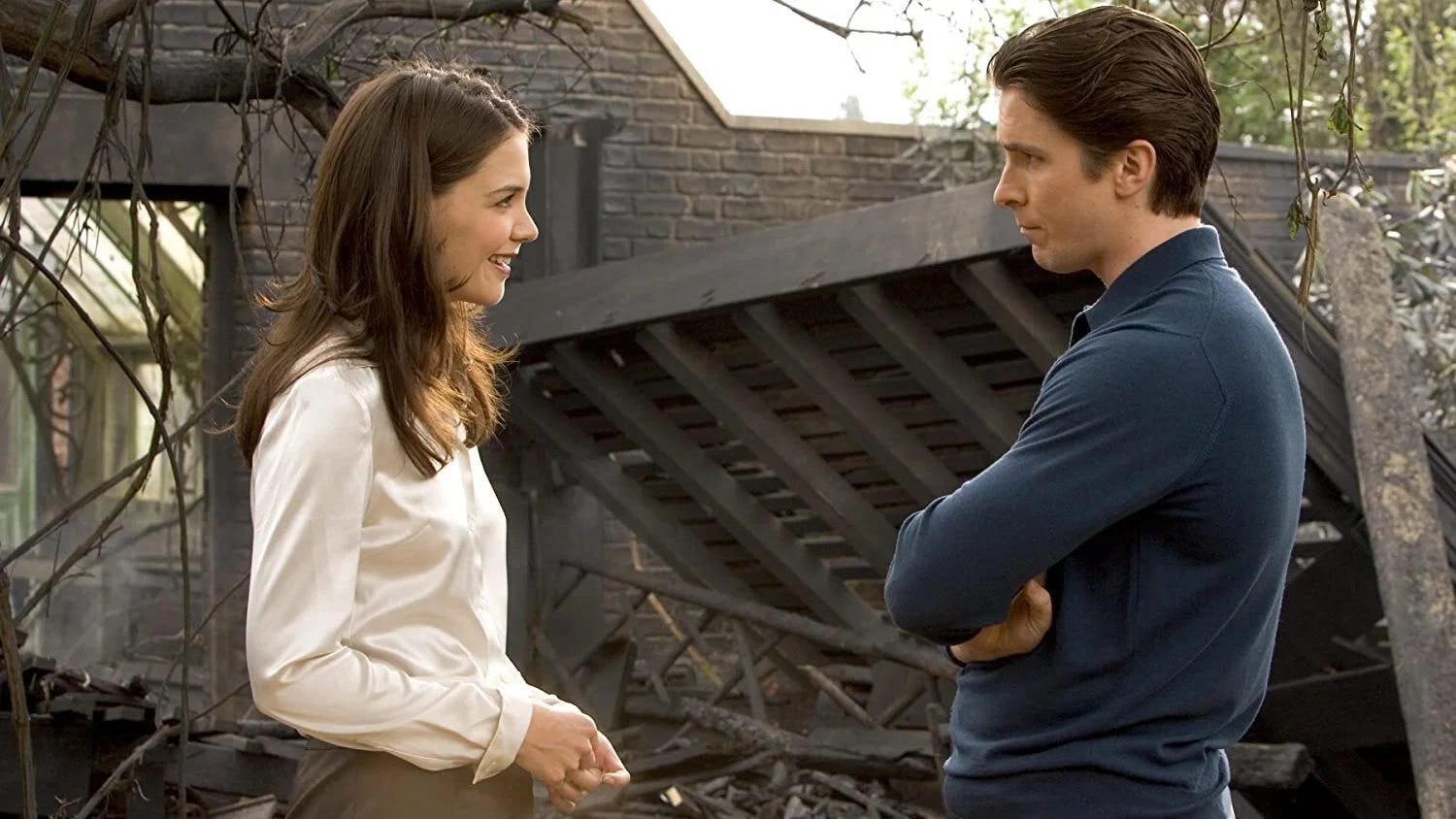
Batman Begins (2005, writeup by Christian Jessup)
Near the end of Christopher Nolan’s first Batman film, the caped crusader delivers the film’s thesis by repeating a quote he heard from Rachel Dawes: “It’s not who I am underneath, but what I do, that defines me.” On the surface, this is Bruce’s subtle way of revealing his identity as Batman to Rachel. But this line provides a foundational understanding of Bruce’s character arc. Both Bruce Wayne (the seemingly shallow playboy and Batman (the fear-inducing, lawless vigilante) are just masks; neither persona defines him. Instead, he is defined entirely by his mission: to restore justice to Gotham and prove that the city isn’t “beyond saving.” This concept of definition-by-deed can also be found in the Gospels, where the writers argue that Christ’s signs and miracles define him. Peter’s identity realization in Matthew, “You are the Christ,” comes after Jesus feeds the four thousand, and during Holy Week these signs come to a pinnacle. Jesus abandons the traditional expectations of power to wash the feet of his disciples, redefines the covenant through the breaking of bread, and ultimately offers his own body as the supreme sacrifice on the cross. There is a striking parallel here in how Nolan presents the dark knight. Just as Christ’s body becomes present inside of Christians when we take the eucharist, Batman in the film acts as a necessary, sacrificial presence embedded within the city’s veins (this theme would come to the forefront in the sequel films). By choosing to endure the city’s darkness and bear the weight of its corruption, Batman becomes a constant, tangible reminder that Gotham is not beyond redemption, a sign that even in a city defined by corruption, a commitment to justice and salvation can transform the body and the soul, and infuse a decaying environment with the hope of a new, restored earth.

Ratatouille (2007, writeup by Travis Johnson)
Pixar’s Ratatouille is a celebration of creativity as much as food, and we can find an invitation to the eucharist in the film’s colorful expositions of taste and texture. It reminds us food is an experience that occurs as a result of creative force. “A cook makes,” we’re told, while “a thief takes.” The treasure of the eucharist is not in the taking, but the partaking—the participation; the making of the bread and the wine before is it tasted. The smell and the texture are all wrapped in the experience Christ parallels to partaking in Himself. If we think of the eucharist as only a wafer of bread and a thimble of juice, it’s too easy to dismiss. The last supper was a meal, something made and tasted and chewed slowly with intent. When we look at Luke 22:19 in Greek, we find "τοῦτο ποιεῖτε εἰς τὴν ἐμὴν ἀν.” Transliterated, it reads “touto poieite eis ten emen anamnesin”—“do this in remembrance of me.” That word “poieite” is what we translate as “do.” It’s also where we get the word “poetry.” I heard another writer say we could take this statement to mean: “be creative in remembrance of me.” As Remy says in the film, “If you are what you eat, then I only want to eat the good stuff.”
Follow FilmFisher
FilmFisher is on social media now! We’ve launched a new Instagram account and will be sharing links to each week’s pieces there. You can follow us here.
This Week at FilmFisher
New Piece

That’s all from us this week at FilmFisher. Keep a lookout for new pieces every week, and the Fresh Catch in your inbox every Thursday!