


Introducing Fresh Catch!
Welcome to Fresh Catch, the official FilmFisher newsletter.
Our style of writing here at FilmFisher is very in-depth and requires a lot of time and attention for each piece. This makes it so that we don’t really write a lot about the newest releases that are coming out right now. That’s why we’ve created this space, where we’ll be in your inbox every Thursday morning to let you know what we’ve been watching recently and whether or not we think it might be worth your time to check out, both from the new releases hitting theaters every weekend and from the old favorites we’ve been revisiting.
But first, since you haven’t yet had very long to get to know the writers here at the new and improved FilmFisher, here’s a little intro to the people whose writing you’ll see in these pages each week.
Our Team
You can find full bios of each of our writers and the rest of our team over at the Our Team page on our Substack site, but here’s a quick introduction to each of us.
Timothy House, Editor
Timothy is the editor of FilmFisher, commissioning pieces, scheduling their publication, copy editing each one, and supporting the writers of FilmFisher however he can.
Timothy Lawrence, Senior Writer
Timothy was the previous editor of FilmFisher, and he has returned to the publication to advise and guide our writing team, and to contribute his thoughtful prose to the pages of FilmFisher once again.
Travis Kyker, Regular Contributor
Travis is returning to FilmFisher after writing many pieces a few years back. His insight has only gotten sharper, and he’ll be contributing that wisdom to FilmFisher on a regular basis.
Christian Jessup, Regular Contributor
Christian is a newcomer to FilmFisher, having contributed to a number of publications in the past. An accomplished critic and film composer, he’ll be contributing pieces to FilmFisher on a regular basis.
Catch of the Week
Each week, we’ll be offering recommendations for films you might be interested in checking out. This week, by way of introduction, we’re each recommending one older film that we treasure, but that others may not have discovered the way we have, as well as the film from this year that has most excited us so far.
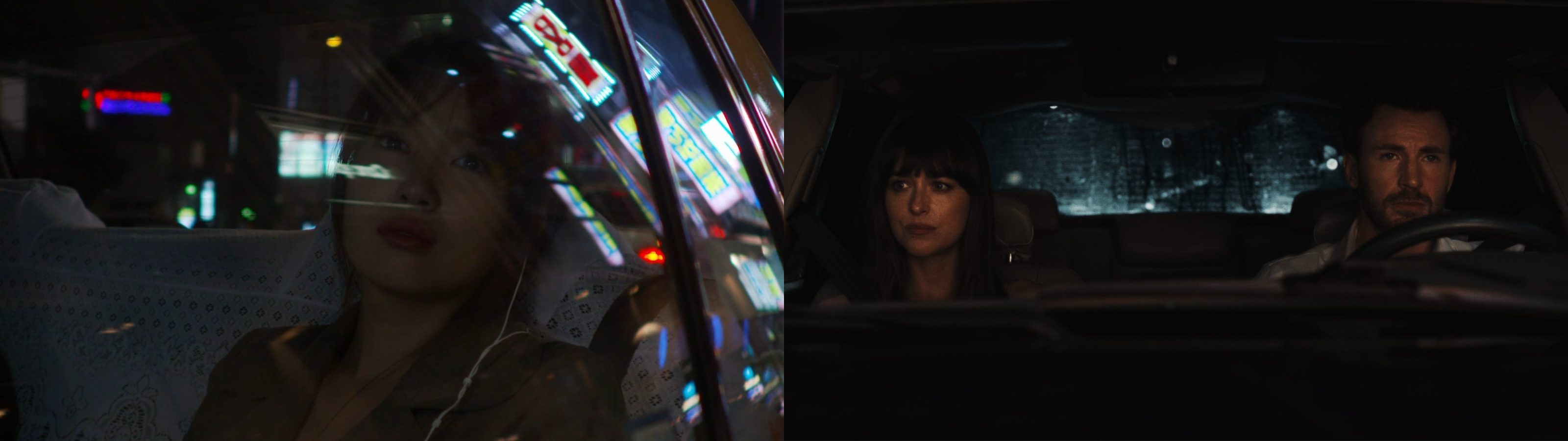
Timothy House:
Like Someone in Love (2012)
One of Abbas Kiarostami’s least typical works — if Kiarostami ever made something ‘typical’ — Like Someone in Love is a fascinating study of translation, communication, and the roles of men and women in society. The use of reflections and glass panes alone makes this one of the most compelling arguments for the value of digital cinematography I’ve seen, and Kiarostami takes full advantage of the gorgeous and symbolically rich opportunities that visual language provides. Like Someone in Love is playful, elusive, absolutely stunning, and one of the most enigmatic works from a filmmaker who once convinced both the accused and the victims in a criminal case to play themselves in a staged narrative film depicting the crime.
Materialists (2025)
2025 has been a very busy year for me both personally and professionally, and I haven’t had the chance to get to the cinema nearly as often as I would have liked. One day, though, I had a free afternoon and nothing to do, so I went on a whim and saw Materialists. Upon reflection as I left the movie, I’m not sure I can think of another working filmmaker right now who is so clear about the sanctity and beauty of marriage than Celine Song. If the reflections on my own relationship with my now-wife that 2021’s Past Lives and Materialists have inspired me to are anything to go by, I’m excited for any close examination of the obstacles and rewards of marriage in our modern context that she wants to offer.
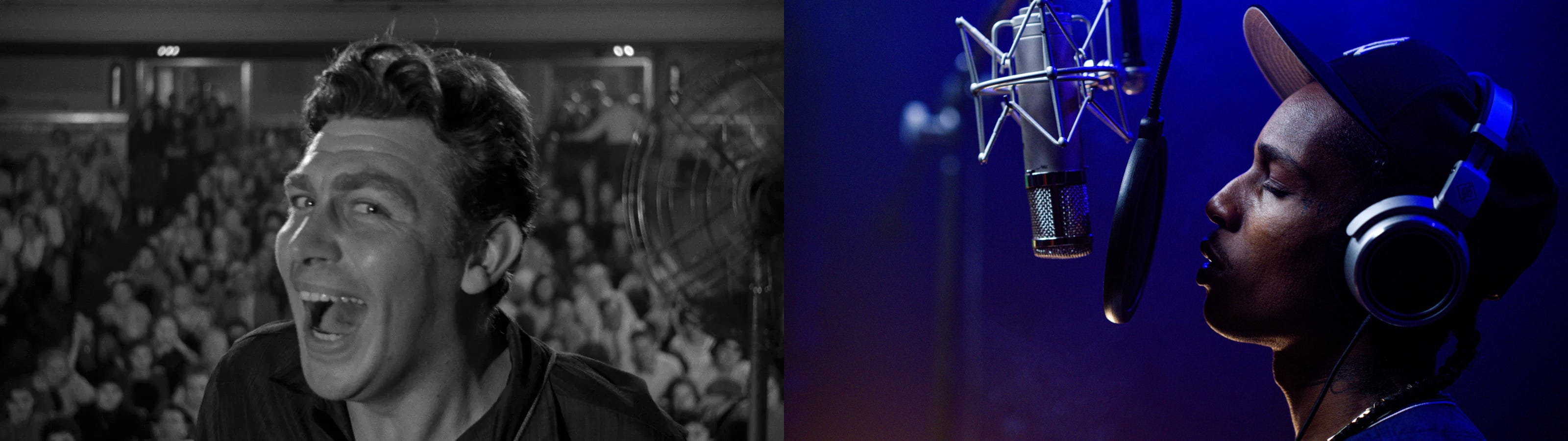
Christian Jessup:
A Face in the Crowd (1957)
As a North Carolina native, I’ve always loved the fact that this is Andy Griffith’s film and television debut, and in a starring role no less. But beyond that, A Face in the Crowd is a haunting look at the seduction of fame and media power, as well as the human tendency to worship celebrity. It’s a film years ahead of its time and a personal favorite of mine. “Pride goes before destruction, a haughty spirit before a fall.” - Proverbs 16:18
Highest 2 Lowest (2025)
Spike Lee’s latest film (a remake of Kurosawa’s High and Low) casts Denzel Washington as David King in this not-so-subtle biblical allegory. The film isn’t without flaws – its tone wavers and the first act drags – but its spiritual themes, thrilling final stretch, and emotional payoff make it one of Lee’s most rewarding works. Like its protagonist, Highest 2 Lowest journeys through hell to rediscover heaven, ending on a note of renewed faith.
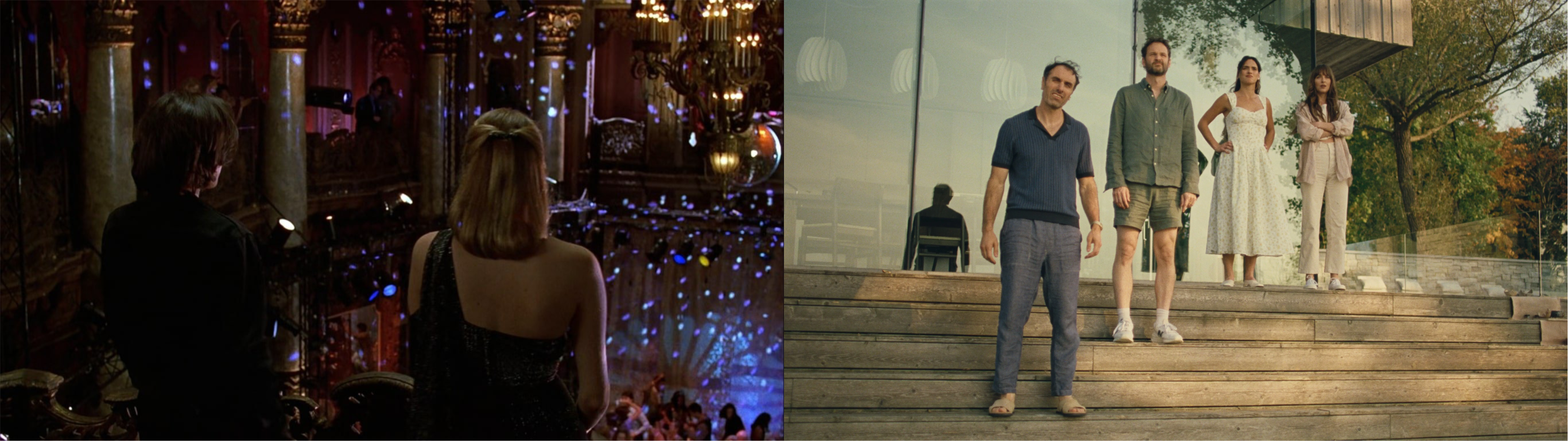
Travis Kyker:
The Last Days of Disco (1998)
Whit Stillman is, for me, maybe the contemporary filmmaker whose quantity of output is most out of wack with its quality. His movies are really good, and he doesn’t make enough of them. But as I continue to revisit his too-short filmography — especially the unofficial “trilogy” comprised of Metropolitan, Barcelona, and The Last Days of Disco — the last of these has climbed steadily higher through my personal canon (I’d go to bat for it as the best-kept secret of 90’s kino). As a sardonic, talky social satire which both depicts and deftly inverts the casual nihilism of modern life, it perfects the formula of its two predecessors while also deepening their occasional streaks of melancholy. (Stillman gets deep, but always stays safely tongue-in-cheek.) The film is about the fading of an ultimately inconsequential cultural fad, the death of a particular flavor of New York socialite. But disco means a lot of things to a lot of people. To Stillman, it’s an occasion to observe one’s feeling of decay and loss in the world around them, and what he uses to fill the cracks is interesting: a snatch of an old hymn, a moment of stark self-knowledge, a subway dance sequence. In all of his films, and this one specifically, Stillman gets fables out of foibles, and everyone involved is better off for it.
Splitsville (2025)
It’s only in retrospect that the year’s best comedy suddenly seems very Stillman-esque. Writer Kyle Marvin and writer/director Michael Angelo Covino create and costar in Splitsville, their jointly conceived tragicomedy of errors about two friends, their wives, and what happens when an open marriage starts to seem like a good idea. It was billed as a ribald romcom for the progressive digital age; in fact it is very funny, and no less transgressive, but in something of a surprising direction. Instead of crude jokes Marvin and Covino tap into the deconstructive instinct of postmodernism and let it do its thing, so what unfolds is less a eulogy to liberation than a full-fledged moral nightmare of continually escalating absurdity. Highlights include what is maybe the best fight scene of the year (a great physical bit whose main punchline is its refusal to end), and a truly inspired time-hopping montage which follows a chain of rejected suitors metastasizing into their own fraternal polycule. In Homer Odysseus slays his wife’s suitors; here he befriends them and they all just kinda chill. We have come full circle on western civilization, and Splitsville has closed the loop.
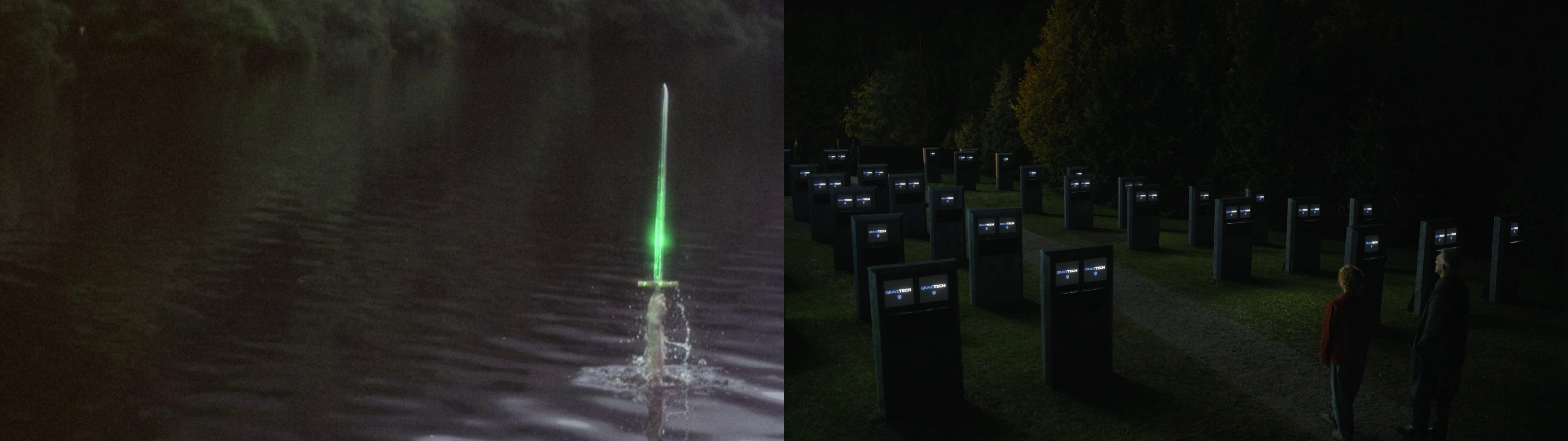
Timothy Lawrence:
Excalibur (1981)
John Boorman’s underappreciated but enormously influential Excalibur is an epic ballad of a film, prizing mythologically powerful sounds and images over conventional plot and character work. When it comes to biopics, I’m no fan of the “cradle to grave” approach, which seeks to compress the entire life of a historical figure into a film’s runtime. At the risk of holding a double standard, though, I love Excalibur precisely because of the way it follows King Arthur not just from cradle to grave but from conception to afterlife. As it barrels through three generations of Arthurian legend, starting with Arthur’s father and ending with his son, the film’s very brevity takes on a kind of Solomonic poignancy. In two brief hours, we see how sins reverberate through family lines for decades, and the glory of a human kingdom starts to feel transient and ephemeral compared to the land that abides forever.
The Shrouds (2025)
It is strange and dark and certainly not for everyone, but no new film this year has stirred me at a more intimate level than David Cronenberg’s The Shrouds. Cronenberg is an atheist and a materialist, but he has rarely seemed more poignantly aware of the limits of his atheism and materialism than in this quasi-autobiographical film made in the wake of his wife’s death. I am not certain I have seen a film that better captures an aspect of grief we do not often dramatize: not the initial sting, but the haze that lingers months and years after the loss. Nothing can bring more comfort in that space than a friend who also knows it and is willing to sit there quietly with you. That is what watching The Shrouds felt like.
This Week at FilmFisher
With the relaunch of FilmFisher, we have a wealth of writing for you to check out available on the Substack site. In addition to the initial backlog of 50 pieces from the FilmFisher archives, we have new pieces from each of our regular contributors.


That’s all from us this week at FilmFisher. Keep a lookout for new pieces every week, and the Fresh Catch in your inbox every Thursday!